
Dishwasher Repair in Tampa, FL
A dishwasher runs a choreographed sequence on every cycle: fill, spray, drain, and dry. The spray arms and circulation pump blast water over the dishes, the filter traps food soil, the drain pump clears the dirty water, and the heating element (with rinse aid) finishes the drying. When dishes come out gritty, standing water pools at the bottom, or a leak spreads across the kitchen floor, one of those stages has broken down — most often drainage, water circulation, or heating. Mineral-rich water leaves scale on spray arms and interiors, and food debris clogs filters faster than most owners expect. This dishwasher repair guide covers the failures we see most in Tampa kitchens and what a proper diagnosis involves.
A dishwasher runs a choreographed sequence on every cycle: fill, spray, drain, and dry. The spray arms and circulation pump blast water over the dishes, the filter traps food soil, the drain pump clears the dirty water, and the heating element (with rinse aid) finishes the drying. When dishes come out gritty, standing water pools at the bottom, or a leak spreads across the kitchen floor, one of those stages has broken down — most often drainage, water circulation, or heating. Mineral-rich water leaves scale on spray arms and interiors, and food debris clogs filters faster than most owners expect. This dishwasher repair guide covers the failures we see most in Tampa kitchens and what a proper diagnosis involves.
Nest Appliance Repair repairs dishwashers in Tampa, FL from most major brands. We find the source of the problem — drainage, leaks, poor cleaning, or electrical faults — and fix it properly. The water inlet valve that feeds your dishwasher is the same kind of part used in refrigerators with ice makers and water dispensers, and we handle refrigerator repair as well. To book a visit, call (888) 550-1464 or send a request through our contact page.
Common Dishwasher Problems We Fix
- Not draining. A failed drain pump, a clogged filter, or a blocked connection where the drain hose meets the garbage disposal or air gap.
- Dishes not coming clean. Clogged spray-arm holes, low water temperature at the start of the cycle, or a weak circulation pump that can’t push water with enough force.
- Leaking water. A worn door gasket, a stuck float switch that lets the tub overfill, loose hose connections, or — more seriously — a cracked tub.
- Won’t start. A faulty door latch (the machine won’t run unless it registers the door as closed), a failed control panel, or an electrical issue.
- Bad odors. Food debris trapped in the filter, sump, or around the door seal, left to sit in a warm, wet tub.
- Spots and film on dishes. Mineral deposits from hard water, or a rinse aid dispenser that isn’t releasing.
- Not drying. A failed heating element, a rinse aid dispenser that isn’t working, or a venting problem on models that dry with a fan.
- Unusually noisy. A worn circulation pump, failing motor bearings, or a spray arm striking a misplaced dish — the last one is worth ruling out before calling.
Our Dishwasher Repair Process
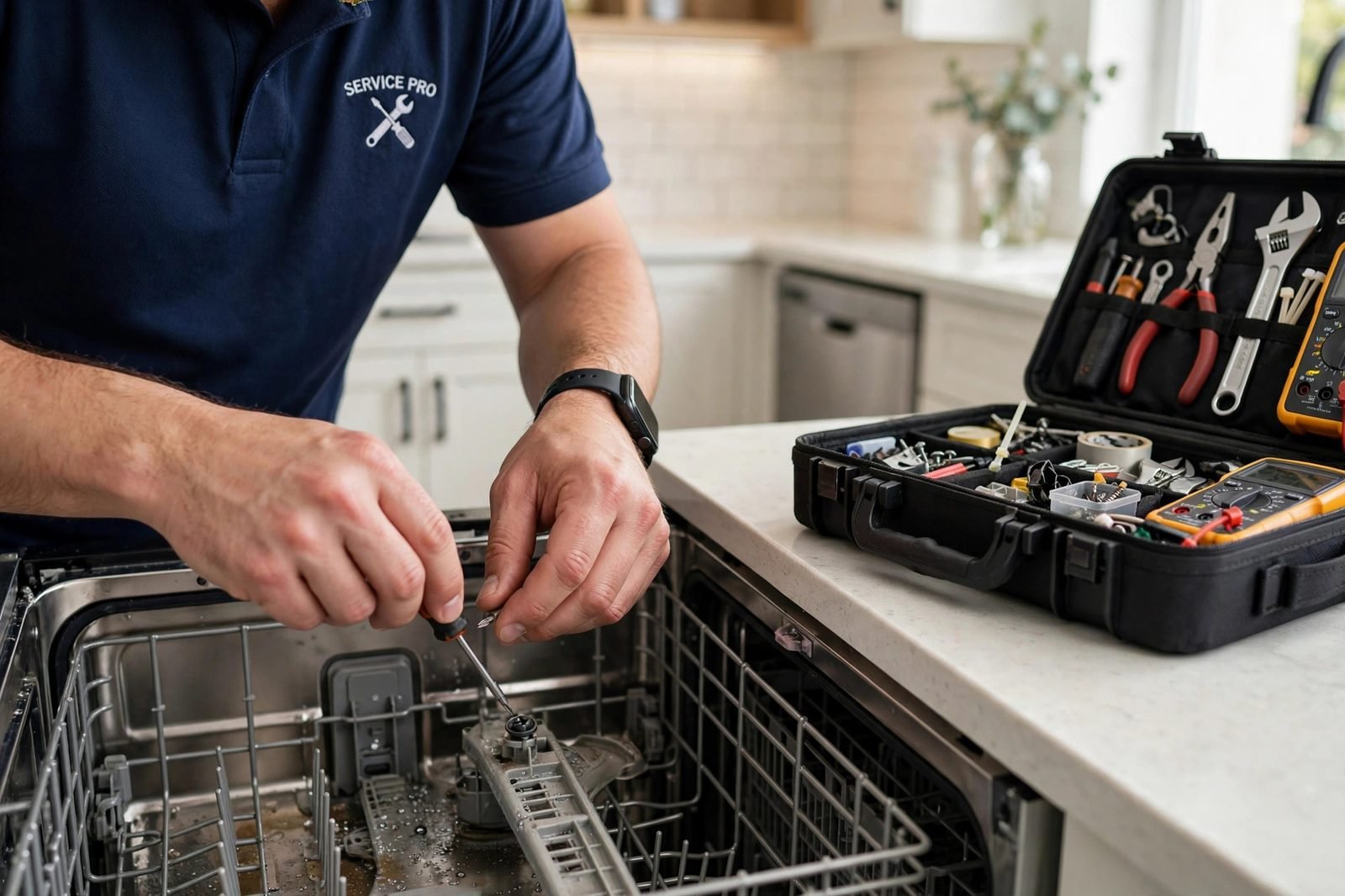
- Inspection. We check the filter, spray arms, door seal, float switch, and controls, then run a short cycle to observe the failure directly — watching a dishwasher work reveals what a description alone cannot.
- Diagnosis. We test the suspect components: drain pump operation, circulation pump pressure, inlet valve function, and heating element continuity. The fault is confirmed before any part is ordered or fitted.
- Clear explanation and cost. We explain what failed and what the repair involves before any work starts. If we find a cracked tub or a control board that costs more than the machine warrants, we’ll say so plainly.
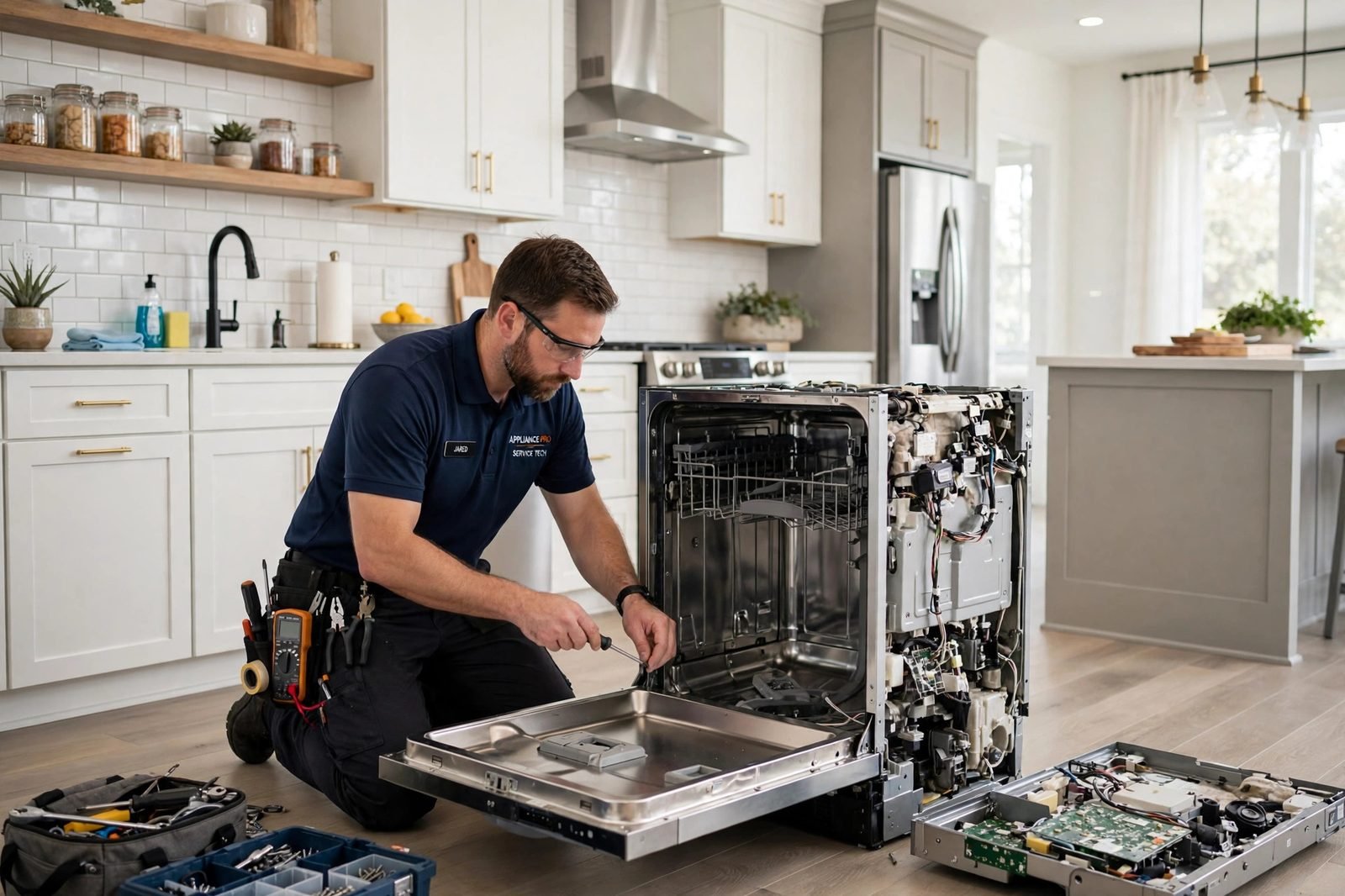
- Repair and full-cycle test. We replace the faulty component, clear any blockages found during the inspection, then run a full cycle to confirm the dishwasher fills, washes, drains, and dries without leaking.
Dishwasher Maintenance Tips for Tampa Homes
- Clean the filter regularly — trapped food is the top cause of odors, gritty dishes, and drainage problems.
- Scrape plates but don’t pre-rinse them. Modern detergents need some food soil to work properly, and over-rinsing can actually leave dishes dirtier.
- Run the hot water at the sink before starting the dishwasher so the cycle begins with hot water instead of waiting for the heater to catch up.
- Keep the rinse aid dispenser filled. It reduces spots, prevents film, and helps dishes dry.
- Leave the door slightly ajar after a cycle so moisture escapes instead of turning stale inside.
- Run the dishwasher regularly, even if it’s not full. Long idle periods let door seals dry out and shrink.
More Services in Tampa
Washing Machine Repair, Refrigerator Repair, Dryer Repair, Oven Repair, Cooktop Repair
← All appliance repair in Tampa
Frequently Asked Questions
How much does dishwasher repair cost in Tampa?
The cost of dishwasher repair in Tampa depends on the failed part and the labor involved. A door gasket, filter, or spray arm is a simpler fix than a circulation pump or control board. The technician diagnoses the issue and explains the repair and its cost before any work begins. Our dishwasher repair page lists the problems we fix most often.
How long does dishwasher repair take?
Most single-part dishwasher repairs are completed during the visit. If a part needs to be ordered, the technician will explain the timeline before you approve the repair.
Why are my dishes still dirty or spotted after a full cycle?
Spots and film are often caused by mineral deposits from hard water or a rinse aid dispenser that isn’t releasing. Gritty dishes usually mean clogged spray-arm holes or a weak circulation pump. Check and rinse the filter first; if the problem persists, a technician can test water circulation during a diagnostic visit.
There is standing water in the bottom of my dishwasher. Is that normal?
A small amount of water around the drain area is normal, but a full pool of standing water is not — it usually signals a drainage problem such as a clogged filter, a blocked hose, or a failed drain pump. Drain pumps do the same job in other appliances: a washing machine that leaves clothes soaking wet often has the same kind of failure. If the water doesn’t clear after a cycle, have it looked at.
Do you service my dishwasher's brand?
We service most major dishwasher brands. Sharing your brand and model number when you book helps the technician arrive prepared. You can read about Nest Appliance Repair and how we approach every visit.
Should I repair or replace my dishwasher?
It depends on the dishwasher’s age, its condition, and the cost of the repair. A failed pump, latch, or valve on a mid-life machine is usually worth fixing. A cracked tub, interior rust, or repeated control failures on an older unit may point toward replacement. The technician will give you a straightforward assessment.
Why does my dishwasher leave gritty residue on dishes?
Grit usually means a clogged filter or blocked spray-arm holes. Pull out and rinse the filter at the dishwasher floor and check the spray arms for trapped debris. If dishes still come out gritty, the circulation pump may not be pushing water with enough force — that needs a technician’s test.
My dishwasher won't start. What should I check?
Confirm the door latches fully — most dishwashers won’t run otherwise — and check that the breaker hasn’t tripped and the child lock isn’t engaged. If it still won’t start, book a diagnostic through our contact page.
Do you replace dishwasher racks, seals, and pumps?
Yes. Racks, door gaskets, spray arms, inlet valves, float switches, and drain and circulation pumps are all replaceable parts. You’ll approve a clear quote before we fit anything.
How do I stop my dishwasher from smelling?
Clean the filter regularly, wipe the door gasket where debris collects, and run an empty hot cycle now and then. Lingering odor after cleaning can signal a drain problem a technician should look at. You can browse everything we service from our home page.
Book Your Appliance Repair
Call us or send the form below and we will get back to you.