Refrigerator Repair in Sarasota, FL
A refrigerator is the only major appliance that runs around the clock, and in Florida’s heat a cooling failure becomes urgent fast. The sealed refrigeration system — compressor, condenser coils, and evaporator — works with airflow parts (evaporator and condenser fans), controls (thermostat or thermistor, defrost timer, control board), and sealing parts (door gaskets) to hold steady temperatures. Warning signs usually appear before a full failure: the fridge runs constantly, frost builds up in the freezer, the ice maker slows down, or food in the fresh-food section doesn’t feel as cold as it should. This refrigerator repair guide explains the symptoms, the components behind them, and what a thorough diagnosis looks like for Sarasota homeowners.
A refrigerator is the only major appliance that runs around the clock, and in Florida’s heat a cooling failure becomes urgent fast. The sealed refrigeration system — compressor, condenser coils, and evaporator — works with airflow parts (evaporator and condenser fans), controls (thermostat or thermistor, defrost timer, control board), and sealing parts (door gaskets) to hold steady temperatures. Warning signs usually appear before a full failure: the fridge runs constantly, frost builds up in the freezer, the ice maker slows down, or food in the fresh-food section doesn’t feel as cold as it should. This refrigerator repair guide explains the symptoms, the components behind them, and what a thorough diagnosis looks like for Sarasota homeowners.
Nest Appliance Repair diagnoses and repairs refrigerators in Sarasota, FL, including French-door, side-by-side, top-freezer, and bottom-freezer models from most major brands. Our technician measures actual temperatures and tests components to find the real cause of the cooling problem — not just the symptom — then explains your options clearly. Like a refrigerator, a dishwasher relies on a water inlet valve, and we service those too. To book a visit, call (888) 550-1464 or reach us through our contact page.
Common Refrigerator Problems We Fix
- Fridge not cooling while the freezer still works. Often a failed evaporator fan that no longer pushes cold air into the fresh-food section, or a damper control that stays shut.
- Neither section cooling. Points deeper into the system — a compressor that won’t start, a failed start relay or capacitor, or a refrigerant restriction in the sealed system.
- Ice maker not making ice. A faulty water inlet valve, a frozen fill tube, or a failed ice maker module.
- Water dispenser not working. A clogged water filter, a frozen water line inside the door, or a bad inlet valve.
- Water leaking inside or underneath. A clogged defrost drain letting meltwater pool where it shouldn’t, a cracked water line, or a faulty inlet valve.
- Excessive frost in the freezer. A failed defrost heater, defrost thermostat, or defrost timer — or a door gasket that no longer seals and lets humid Florida air inside.
- Running constantly. Dirty condenser coils forcing the compressor to work overtime, worn door seals leaking cold air, or a thermostat that never registers the target temperature.
- Loud or unusual noises. A failing evaporator or condenser fan motor, ice buildup hitting a fan blade, or a struggling compressor.
Our Refrigerator Repair Process
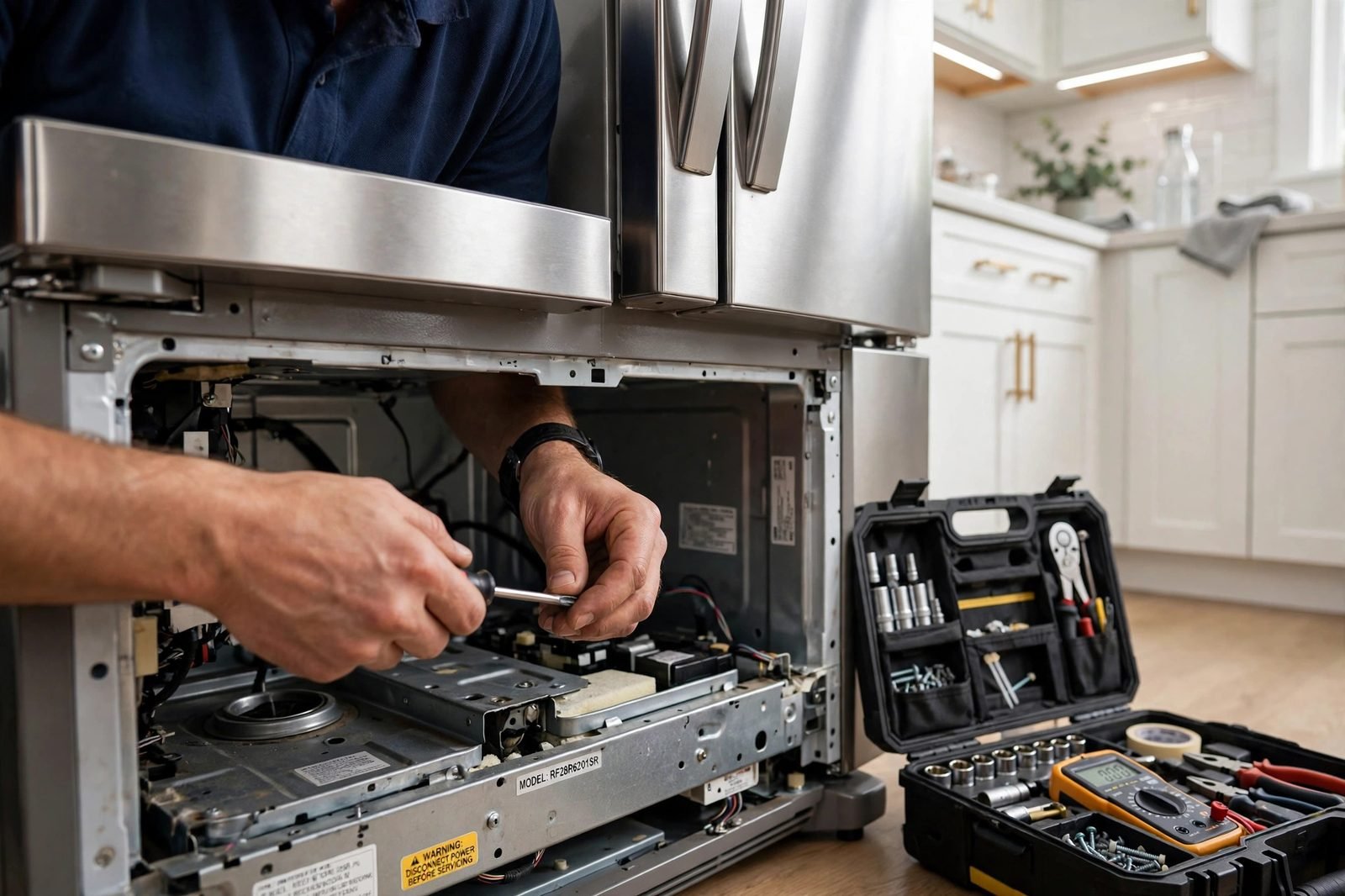
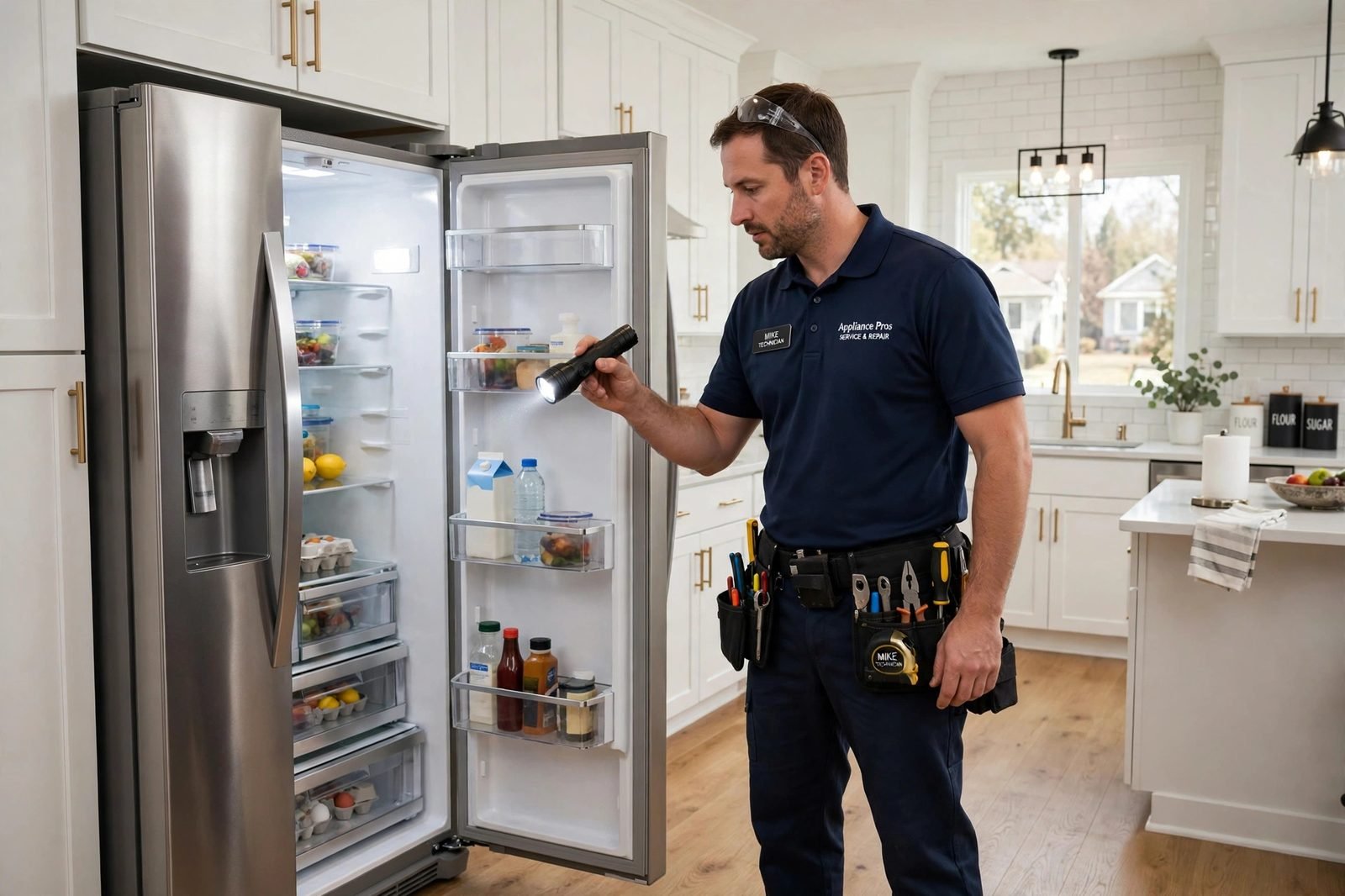
- Temperature and component check. We measure actual temperatures in both compartments and inspect the condenser coils, fans, door seals, and defrost system. Hard numbers come before conclusions.
- Targeted diagnosis. We trace the symptom to its cause — airflow, the sealed system, electrical parts, or the controls — testing components such as the compressor’s electrical draw, fan motors, and defrost heater continuity rather than guessing.
- Clear explanation and cost. We explain what failed, what the repair involves, and what it costs before any work begins. For major sealed-system work, we’ll tell you honestly whether the repair makes sense for your fridge’s age.
- Repair and verification. We replace the failed component, confirm temperatures stabilize in both compartments, and check that the unit cycles on and off normally before we leave.
Refrigerator Maintenance Tips for Sarasota Homes
- Clean the condenser coils every 6 to 12 months. Dust buildup makes the compressor run hotter and longer, shortening its life.
- Test the door seals by closing the door on a dollar bill — if it slides out easily, the gasket isn’t sealing and warm, humid air is leaking in.
- Keep the fresh-food section between 37°F and 40°F and the freezer at 0°F, and verify with a thermometer rather than trusting the display alone.
- Replace the water filter on the schedule your manufacturer recommends; a clogged filter strains the inlet valve and slows the ice maker.
- Don’t block the interior vents with food — cold air must circulate freely between the freezer and fresh-food sections.
- Leave a few inches of clearance behind the unit so the condenser can shed heat into the room.
More Services in Sarasota
Washing Machine Repair, Dryer Repair, Dishwasher Repair, Oven Repair, Cooktop Repair
← All appliance repair in Sarasota
Frequently Asked Questions
How much does refrigerator repair cost in Sarasota?
The cost of refrigerator repair in Sarasota depends on which component failed. Replacing a fan motor, thermostat, or door gasket is a simpler job than sealed-system work on the compressor. The technician identifies the fault and explains the repair and its cost before any work begins. Our refrigerator repair page lists the cooling failures we diagnose most often.
How long does refrigerator repair take?
Most refrigerator repairs — fans, thermostats, defrost parts, gaskets, ice maker modules — are completed during the visit. Sealed-system repairs are more involved and take longer; the technician will explain the expected timeline before you approve the work.
My fridge stopped cooling. What should I do right now?
Move perishable food to a cooler with ice and keep the refrigerator doors closed as much as possible — every opening lets cold air escape. Unplug the unit only if you hear alarming noises or smell burning. Then call (888) 550-1464 to schedule a diagnostic visit in Sarasota.
Do you repair ice makers and water dispensers?
Yes. We diagnose and repair ice maker and dispenser problems on most major brands, including faulty inlet valves, frozen lines, and failed ice maker modules. The water inlet valve is a shared part across appliances — we replace them on dishwashers as well.
Should I repair or replace my refrigerator?
It depends on the unit’s age, its overall condition, and what failed. A single failed fan or thermostat on a mid-life fridge is usually worth repairing. A sealed-system failure on an older unit often tips the balance toward replacement. The technician will give you an honest assessment — that straightforward approach is central to how we work, as described about Nest Appliance Repair.
Why is frost building up in my freezer?
Frost usually means the defrost system isn’t doing its job — a failed defrost heater, thermostat, or timer — or the door gasket is letting humid air inside, a common issue in Sarasota homes. A technician can test each component and replace only the one that has actually failed.
Why is my fridge running constantly but barely cooling?
Constant running with weak cooling often means dirty condenser coils, a failing evaporator fan, or a sealed-system problem. Vacuum the coils underneath or behind the unit; if cooling doesn’t improve, book a diagnostic before food spoils — you can reach us via our contact page.
Is it safe to keep food in a fridge that isn't cooling properly?
Not for long. Move perishable food — meat, dairy, leftovers — into a cooler with ice until the fridge holds temperature again. If the fresh-food section can’t stay at or below 40°F, call for a repair rather than risking spoiled food.
Do you replace refrigerator compressors and thermostats?
Yes. We handle thermostats and thermistors, evaporator and condenser fans, defrost components, door seals, start relays, and compressors. For major sealed-system work we’ll tell you honestly whether the repair makes sense for your fridge’s age and condition.
How can I reduce frost and ice buildup in my freezer?
Keep the door closed as much as possible, make sure the door seals sit flat with no gaps, and let hot food cool before freezing it. Persistent heavy frost usually signals a defrost-system fault worth having checked. You can see everything we service from our home page.
Book Your Appliance Repair
Call us or send the form below and we will get back to you.