Washing Machine Repair in Orlando, FL
A washing machine moves through four stages on every load — fill, wash, drain, and spin — and a failure at any stage brings laundry day to a halt. When a washer stops mid-cycle, leaves clothes soaking wet, leaks across the laundry room floor, or shakes violently during the spin, the cause is usually one of a small set of hard-working components: the drain pump, the drive belt, the water inlet valve, the lid switch or door latch, or the suspension system that steadies the drum. Early warning signs — cycles that run long, new grinding or thumping noises, or a faint musty smell when you open the door — often mean a small part is starting to fail. This guide to washing machine repair covers the breakdowns we see most often in Orlando homes, what a proper diagnosis involves, and how to get more years out of your washer.
A washing machine moves through four stages on every load — fill, wash, drain, and spin — and a failure at any stage brings laundry day to a halt. When a washer stops mid-cycle, leaves clothes soaking wet, leaks across the laundry room floor, or shakes violently during the spin, the cause is usually one of a small set of hard-working components: the drain pump, the drive belt, the water inlet valve, the lid switch or door latch, or the suspension system that steadies the drum. Early warning signs — cycles that run long, new grinding or thumping noises, or a faint musty smell when you open the door — often mean a small part is starting to fail. This guide to washing machine repair covers the breakdowns we see most often in Orlando homes, what a proper diagnosis involves, and how to get more years out of your washer.
Nest Appliance Repair diagnoses and repairs washing machines in Orlando, FL, including top-load, front-load, and high-efficiency models from most major brands. Our technician traces the fault to the failed component and gives you a clear explanation of the repair and its cost before any work begins. Most laundry rooms pair a washer with a dryer, and we service dryers as well. To book a visit, call (888) 550-1464 or send a request through our contact page.
Common Washing Machine Problems We Fix
- Washer won’t start. Often a failed lid switch or door latch assembly — the machine is designed not to run unless it registers the lid or door as closed. A tripped breaker, a worn power cord, or a failed control board are other possibilities.
- Won’t drain. Commonly a clogged or failed drain pump, a blocked pump filter (the coin trap), or a kinked drain hose. Standing water left in the drum after the cycle is the telltale sign.
- Clothes come out soaking wet. Points to a drain or spin problem — a stretched or broken drive belt on top-load models, a worn motor coupling or clutch, or a drain restriction that prevents the spin cycle from doing its job.
- Leaking water. Worn door boot seals on front-load machines, cracked or loose drain hoses, a failing water inlet valve, or simply too much detergent creating excess suds that spill over.
- Violent shaking or banging in spin. An unbalanced load or an unlevel machine is worth ruling out first. Persistent shaking usually means worn suspension rods (top-load) or shock absorbers (front-load) that can no longer steady the drum.
- Detergent dispenser not releasing soap. Clogged dispenser drawers, or a water inlet valve that no longer opens fully to flush the drawer.
- Door won’t lock on front-load models. A faulty door latch assembly or a control issue preventing the lock signal.
- Musty odors from the drum. Detergent residue and trapped moisture feeding mildew in the door boot and drum — front-load machines are especially prone to this.
- Error codes on the display. The machine’s own diagnostics point toward the failing system, whether drainage, water fill, or the motor — a technician reads the code and then verifies with physical testing.
Our Washing Machine Repair Process
- Observe and reproduce. We run the machine through its cycles, note any error codes, and listen for where in the fill-wash-drain-spin sequence the failure occurs. The pattern of the failure narrows the suspect list considerably.
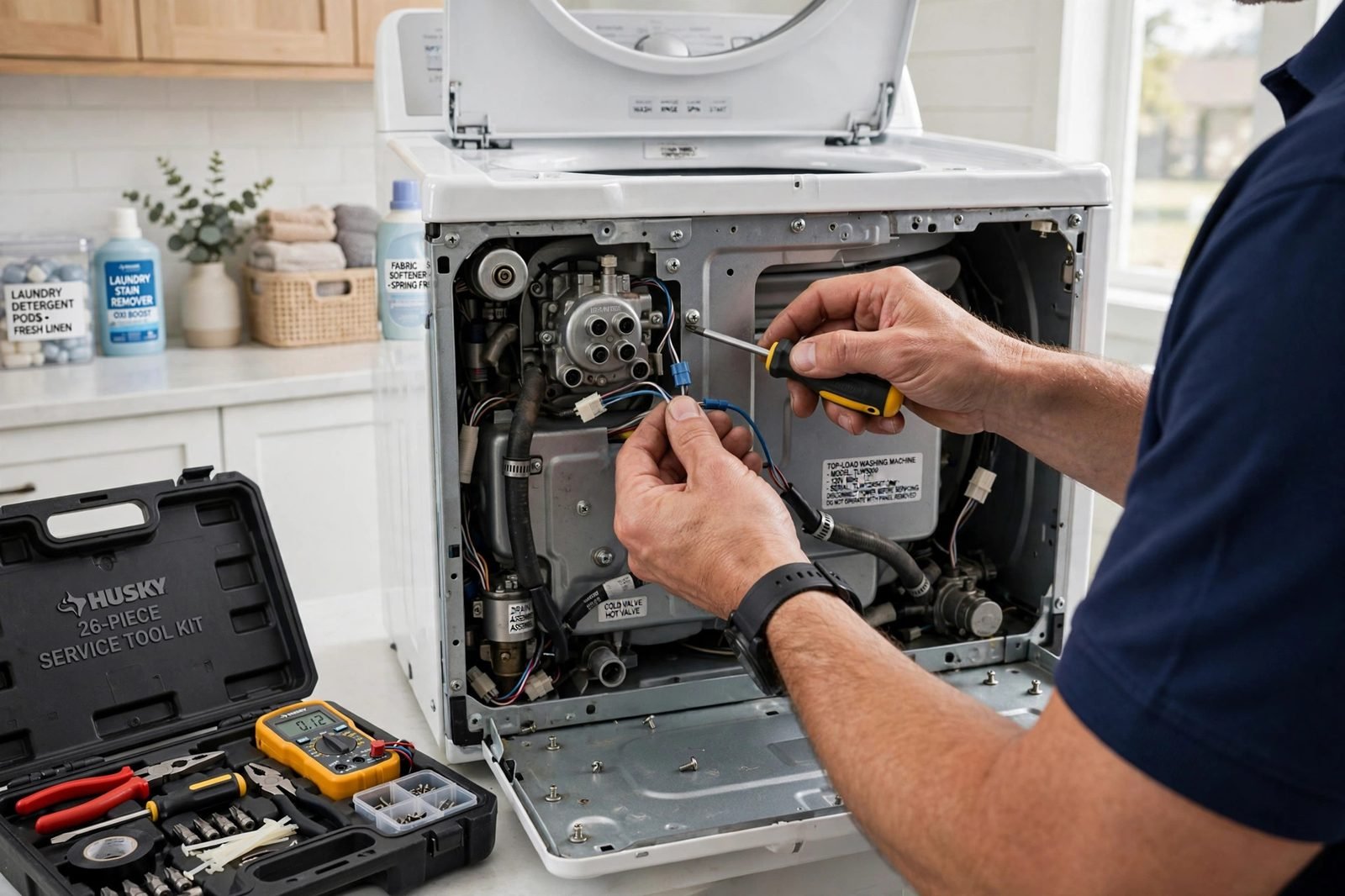
- Component testing. We test the likely parts directly — inlet valve solenoids, the drain pump, lid switch continuity with a multimeter, belt tension and wear, and the condition of suspension rods or shocks. Diagnosis is evidence-based, not guesswork.
- Clear explanation and cost. We explain what failed, what the repair involves, and what it costs before any work starts, and we answer your questions. You approve the repair with full information.
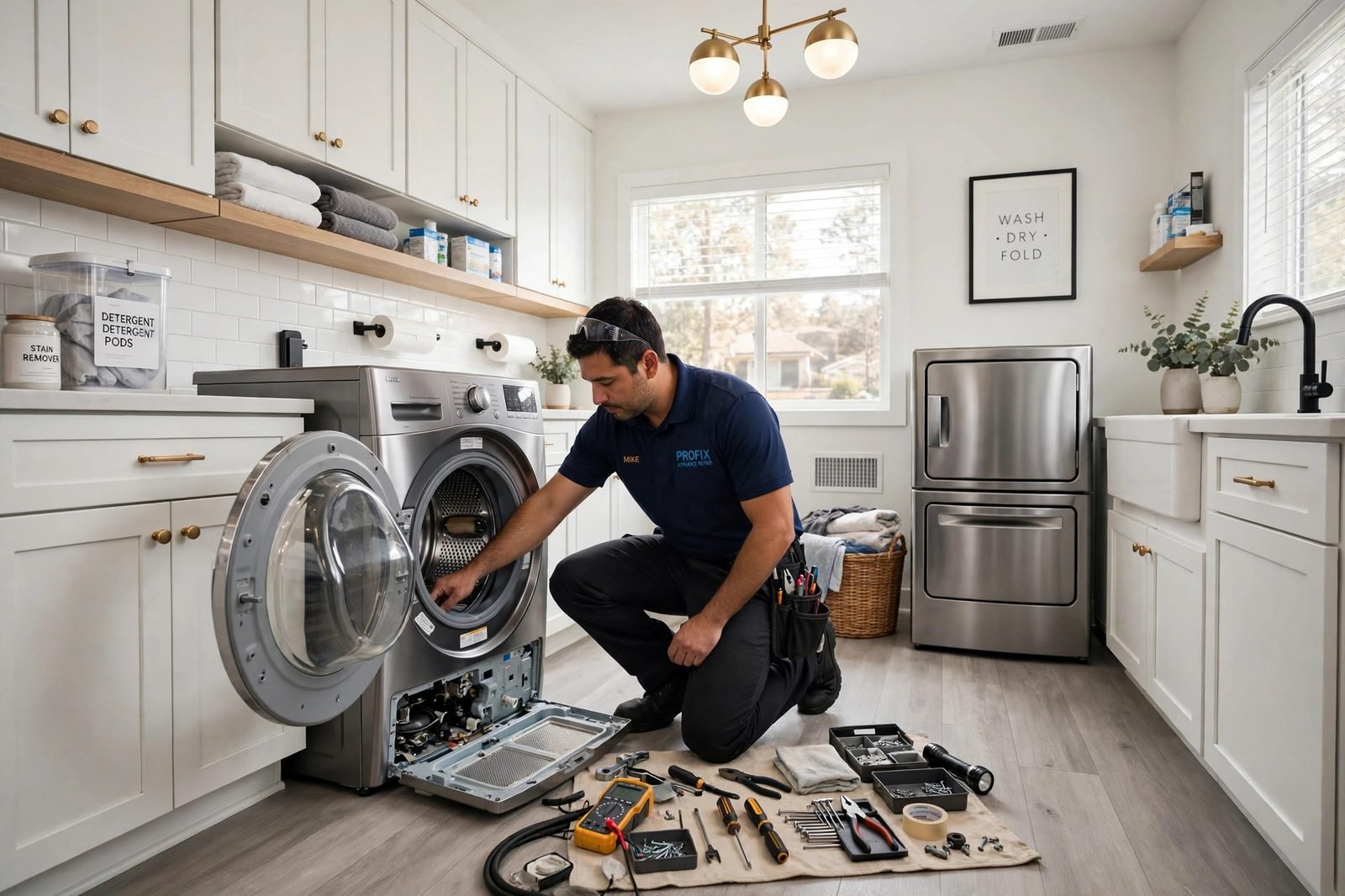
- Repair and full-cycle test. We replace the failed part, check adjacent components for wear while we are in there, then run a complete cycle to confirm the machine fills, washes, drains, and spins correctly before tidying the work area.
Washing Machine Maintenance Tips for Orlando Homes
- Use high-efficiency (HE) detergent in HE machines, and dose carefully — excess soap leaves residue, feeds odors, and can confuse water-level sensors.
- Leave the door or lid open between loads so the drum and door boot dry out instead of growing mildew.
- Clean the drain pump filter (coin trap) every few months. Trapped coins, lint, and small objects are a leading cause of slow draining.
- Inspect the inlet hoses for cracks, bulges, or brittleness, and replace them if they look worn — a burst supply hose floods fast.
- Keep the machine level. An unlevel washer vibrates more and wears out its suspension parts sooner.
- Don’t overload the drum. Overloading strains the belt, motor, and suspension, and clothes don’t get properly clean.
- Run a hot maintenance wash with an empty drum now and then to dissolve detergent buildup inside the machine.
More Services in Orlando
Refrigerator Repair, Dryer Repair, Dishwasher Repair, Oven Repair, Cooktop Repair
← All appliance repair in Orlando
Frequently Asked Questions
How much does washing machine repair cost in Orlando?
The cost of washing machine repair in Orlando depends on which component failed and what the replacement involves. A lid switch, drain hose, or belt is a simpler fix than a control board or transmission. During the visit, the technician identifies the faulty part and explains the repair and its cost before any work begins, so you can decide with full information. See our washing machine repair overview for the problems we diagnose most often.
How long does a washing machine repair take?
Most single-part repairs — lid switches, drain pumps, belts, hoses, and valves — are finished during the visit. If a part has to be ordered, the technician will tell you what to expect before you approve the repair, so there are no surprises.
Should I repair or replace my washing machine?
It depends on the machine’s age, the cost of the repair, and its overall condition. A newer machine with a single failed part is usually worth fixing. If the washer is older, has broken down repeatedly, or needs a major component such as the transmission, replacement may make more sense. The technician will give you a straightforward assessment either way.
Do you service my washer's brand?
We service most major washer brands, including top-load, front-load, and high-efficiency models. Sharing your brand and model number when you book helps the technician arrive prepared. You can read about Nest Appliance Repair and how we approach every repair visit.
Why does my washer smell bad even after a wash?
Musty odors usually come from detergent residue and moisture trapped in the door boot or drum, where mildew takes hold. Front-load machines are especially prone to it. Wiping the boot, using less HE detergent, leaving the door open between loads, and running an occasional hot empty wash keeps it under control.
My washer shakes violently during the spin cycle. Is that serious?
Heavy vibration is often caused by an unbalanced load or a machine that is no longer level — both worth checking first. If it continues with balanced loads, worn suspension rods or shock absorbers are the likely cause, and running the machine that way can damage the drum, belt, and hoses. Dryers have their own drum support parts — worn drum rollers cause a similar thumping — so if both laundry appliances are aging, it is worth having each checked. Call (888) 550-1464 to schedule a washer inspection in Orlando.
My washer won't start at all. What should I check first?
Confirm the washer is plugged in, the circuit breaker hasn’t tripped, and the lid or door is fully closed — most machines won’t start unless the latch engages. Also check that a delay-start timer or control lock isn’t active. If it still won’t start, book a diagnostic through our contact page and we’ll trace the electrical or control fault.
Why does my washer leave clothes soaking wet?
Soaking-wet clothes point to a drain or spin failure — a clogged pump filter, a worn drain pump, or a stretched drive belt. Clean the pump filter first; if the problem persists, the pump or belt likely needs attention. Drain pumps fail in other appliances too — a dishwasher that leaves standing water has the same kind of problem.
Do you replace washing machine belts, pumps, and motors?
Yes. Drive belts, drain pumps, motors, lid switches, inlet valves, and suspension parts are among the most common washer repairs we handle. You approve a clear quote before any part is replaced.
How can I make my washing machine last longer?
Don’t overload it, use the right amount of HE detergent, leave the door or lid open between washes so the drum dries out, and clean the drain pump filter regularly. Small habits like these prevent most premature breakdowns. You can browse every service we offer from our home page.
Book Your Appliance Repair
Call us or send the form below and we will get back to you.